




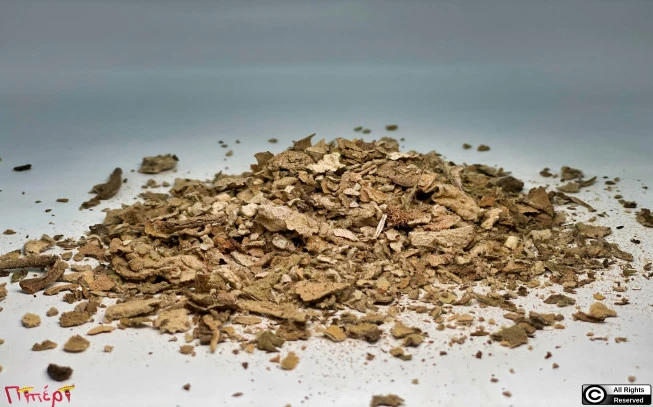
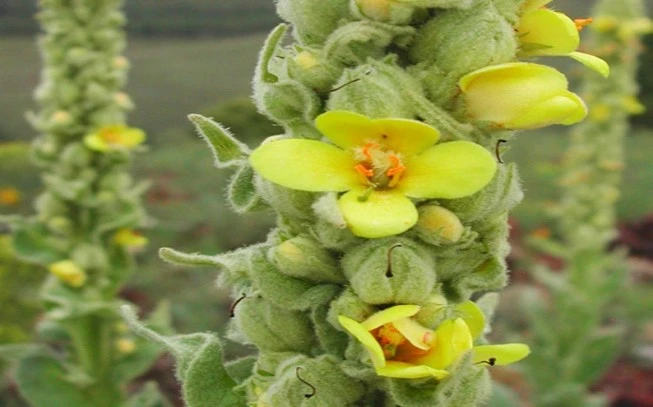
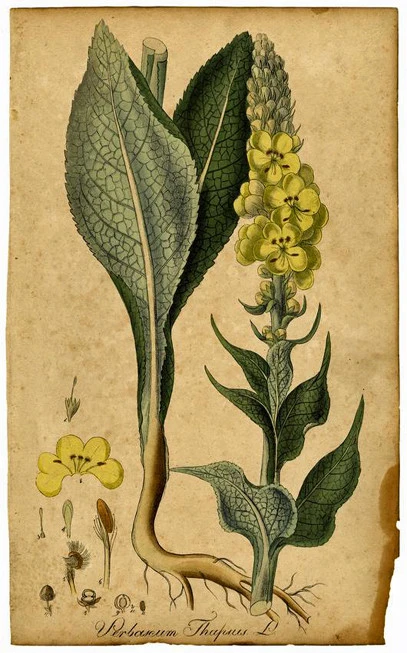
Floss, an important herb for the respiratory system and beyond.
RESPIRATORY
SKIN DISEASES
URINARY SYSTEM
Native herb, quite common in Europe, Asia and North Africa.
In the past, it was attributed magical properties, while it was also associated with death.
Traditionally, its use, after proper treatment, aimed at the treatment of respiratory problems, the treatment of coughs and various gastrointestinal disorders.
The plant phloem has been known since antiquity and was used for its medicinal properties.
He owes Theophrastus the adjective "thapsos", as he wrote about an unspecified herb in the ancient Greek colony of Thapsos, near Syracuse.
Dioskourides refers to it as "vebasco the black", while Pliny also refers to its healing properties.
Dioscorides recommended it for scorpion bites, sore throats, toothaches and coughs.
When in the 19th c. Athens became the capital of the newly formed Greek state, lacked a sewerage network and in the stagnant waters the mud was grown in large numbers and created an unpleasant atmosphere.
This is how the phrase "mumbled us" came about.
While it also has the meaning of "stun" as it was also used in fishing to stun the fish. (This use is now prohibited by law).
Useful in the treatment of cough and congestion in people with diseases of the respiratory system. Mucus is recommended for the treatment of coughs, sore throats and colds.
It acts as an expectorant, emollient, mild diuretic, mild sedative and healing. The flowers are beneficial for the respiratory system. They stimulate the mucous membranes of the respiratory tract, reducing inflammation and stimulating the production of fluids, thus facilitating expectoration.
It is considered a special remedy for bronchitis, when there is a strong cough with sore throat.
The anti-inflammatory and emollient properties make the plant effective in cases of inflammation of the trachea and other similar conditions.
It has a positive effect on diseases of the intestinal tract and urinary tract.
Cold infusion of the herb in olive oil is excellent for soothing and healing any inflamed area on the surface of the skin.
The decoction of the leaves helps externally in washes for cases of diarrhea and dysentery, for the application of burns, itching or lichen, while the same decoction is laxative, laxative.
Tones and cleanses the eyes and soothes eyelid inflammation.
In homeopathy it is used against breast diseases, coughs and excessive mucus, inflammation of the mouth and larynx, as well as for children who continue to have nocturnal enuresis when they grow up.
Smeared externally the mucus is emollient and very good wound healing.
Its flowers are soaked in olive oil and used in infections of the ears, glands and hemorrhoids.
Internally as an infusion and externally with oil on injured or swollen glands.
For mastitis internally as an infusion and externally with oil.
For internal bleeding of the intestine, together with cow's milk.
Infusion : For chronic cough, throat infections or fever and whooping cough.
Oil infusion : For the pain of ear infections, such as ointment for wounds, skin ulcers, hemorrhoids, eczema, frostbite, blepharitis, and abrasions for respiratory problems.
Tincture : For Chronic Respiratory Diseases.
Action : Laxative, emollient, the most diuretic, sedative, suitable for wounds, astringent, anti-inflammatory.
Basic Ingredients : Mucous, Saponites, Essential Oil, Bitter Elements, Flavonoids (Routine), Glycosides.
How to use : infusion, oil infusion, tincture.
Side effects:
The infusion of the flowers requires careful straining so that the small hairs that can irritate the throat and cause coughing do not pass.
 Filters
Available
Code: 173
Price: 2,00€ / 100 grams
Available
Code: 495
Price: 2,50€ / 250 grams
Is expected
Code: 771
Price: 12,00€ / 1,000 grams
Available
Code: 2017444427254
Price: 2,25€ / 50 grams
Available
Code: 689
Price: 5,00€ / 50 grams
Available
Code: 372
Price: 25,00€ / 50 grams
Available
Code: 153
Price: 1,75€ / 50 grams

‹
›