




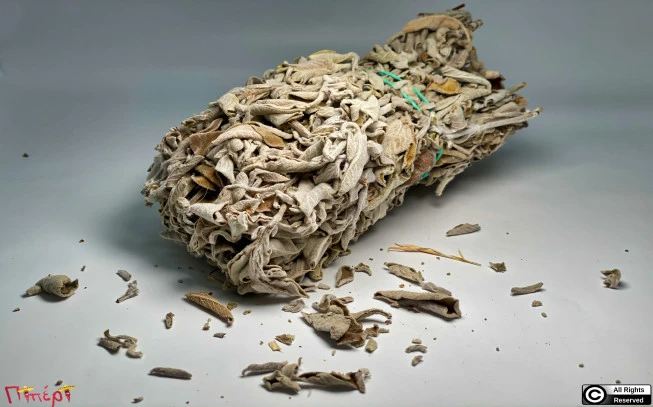
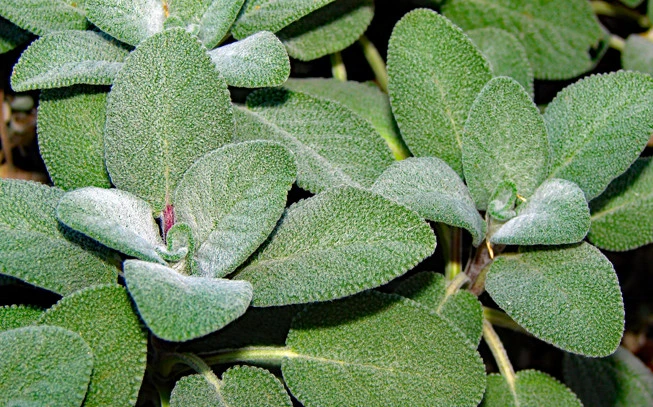
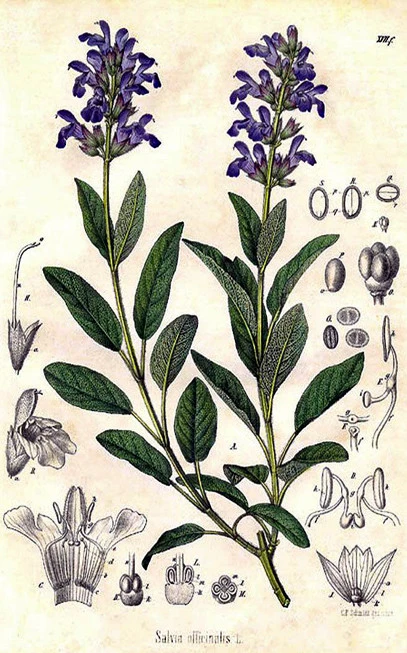
Sage, the Greek herb of immortality.
BRAIN FUNCTIONS
CHOLESTEROL
DIABETES
GYNECOLOGICAL
ORAL HEALTH
PAINS
RESPIRATORY
STIMULANT
TONSILLITIS
UREA DISEASE, CREATINE
WEAKNESS ( ATONIA )
It originates from the Mediterranean region and is a well-known culinary and healing herb. It is widely used to combat digestive problems and menopause, especially hot flashes, and has traditionally been linked to longevity.
Common sage (Salvia officinalis) belongs to the mint family, along with oregano, rosemary, basil and thyme.
The botanical name Salvia comes from the Latin "salvere" which means "heal", which indicates healing properties.
The ancient Greeks used it in snake and insect bites, but also as a general tonic for the mind and body.
The French call it Greek tea and the Chinese a Greek drink, considering it the best of the tea.
The Dutch appreciated it so much that they exchanged 2 cans of their own with 1 can of sage.
Used since very ancient times. The ancient Greeks considered it a sacred plant and had dedicated it to the god Zeus.
Women in ancient Greece welcomed men from the war with a sage drink to "stimulate" fertility.
The ancient Egyptians gave women to drink sage to increase their fertility.
The great properties of sage are praised by Theophrastus, Hippocrates, Dioscorides, Galen, Aetius.
The Latins called the sage a sacred plant (herba sacra), considered it the sacred plant of immortality.
Cooking:
It is often used in cooking because it flavors food as a staple herb for various cuisines around the world.
Here are some ways you can add sage to your diet:
Sprinkle as a garnish in soups.
Add chopped leaves to tomato sauce.
As a spice in grilled vegetables.
Dried sage can be used on meat.
Used in small quantities as it has a strong aroma.
Used to flavor various broths, foods and vinegar.
Its taste is quite peppery and goes well with fatty meats and cheeses. Also goes well with fish and seafood.
Therapeutic:
Antioxidant
Antioxidants can neutralize potentially harmful free radicals associated with chronic diseases.
also contains over 160 polyphenols chlorogenic acid, caffeic acid, rosmarinic acid, ellagic acid and rutin.
One study found that 1 cup of sage decoction twice a day significantly increased the body's antioxidant defenses
Brain Booster
The plant is traditionally known as a brain tonic.
Many species of Salvia are effective inhibitors of the enzyme acetylcholinesterase (AcE) which is the basis of most drugs for relieving symptoms in the early stages of Alzheimer's disease.
Against diabetes
Study finds sage tea acts like metformin, a drug prescribed to manage the blood sugar of diabetics
Sage leaf extract has been shown to lower blood sugar and improve insulin sensitivity as much as rosiglitazone, another anti-diabetic drug.
Against hot flashes
sage was used to reduce menopausal symptoms such as e.g. are hot flashes.
The phytochemicals found in sage have estrogen-like properties, allowing them to bind to certain receptors in the brain to help treat hot flashes and excessive sweating.
Against germs
Sage leaves have excellent antiseptic and antimicrobial properties.
One of its components, salvin, has antimicrobial activity against Staphylococcus aureus, a common bacterium responsible for skin and upper respiratory tract infections.
Its antimicrobial properties can kill germs that promote dental plaque and reduce the bacterium Streptococcus mutans, which is thought to be responsible for caries
Other actions
Elevates the body, strengthens and stimulates the nerves and adrenal glands in cases of weakness and for recovering patients.
Exercises mucolytic action (cough, sinusitis).
Recommended for all forms of atony and weakness, nervous weakness, tremor, dizziness and neuralgia.
Stimulates and rejuvenates tired and aching muscles.
Studies have shown that it contains compounds that can relieve diarrhea.
Also, in one study, sage decoction twice daily reduced "bad" LDL cholesterol while increasing the "good" HDL cholesterol after two weeks.
Stimulates nerves, adrenal glands and circulatory system.
Relieves cramps. It is said to sharpen the intellect and especially the perspicacity.
It is beneficial for the hair, if we use it for rinsing.
The foot bath with sage infusion cools and has a deodorizing effect.
Improves the color of dark and gray hair. Tones and gives shine to dry and sensitive hair.
It is astringent, like a face mask.
Recommended as a cosmetic for oily skin, as a mask for deep cleansing of the face and as a steam bath.
Finally, sage is contained in cosmetics that are applied topically as a natural skin care.
Helps with mosquito and wasp bites, rubbing the irritated spot with fresh sage leaves.
Infusion : For circulatory, blood sugar, for diarrhea, to improve digestive function, to fight menopausal symptoms, for night sweats, helps to stop milk during weaning .
Tincture : For menopause to stimulate the digestive system.
Gargle mouthwash : For sore throat, tonsillitis, periamygdal abscess, mouthwash for mouth ulcers, gingivitis.
Hair conditioner : For hair loss, dandruff or to restore color to gray hair.
Cream : For cuts and abrasions.
Action : Anti-flatulence, antispasmodic, astringent, antiseptic, reduces the production of sweat, saliva and milk, uterine stimulant, cholagogue.
Basic ingredients : essential oil (thujone, linalool, borneol), diterpene, tannins, flavonoids, estrogenic substances.
How to use : Infusions, Gargles - mouthwash, tincture, hair conditioner, cream - ointment - lotion.
Side effects:
Its use should be done with caution because there are cases of poisoning from overuse due mainly to the substance thujone present in the plant.
This chemical can cause seizures, damage to the liver and nervous system.
According to the permissible thujone limits set by the European Medicines Agency (Coreper) no more than 7-12 should be consumed.
Due to the emmenagogue action of sage it should not be used by women in reproductive effort as it may cause miscarriage.
It should not be consumed by young children and for the same reason by breastfeeding women.
 Filters
Is expected
Code: 173
Price: 2,00€ / 100 grams
Available
Code: 495
Price: 2,50€ / 250 grams
Available
Code: 771
Price: 12,00€ / 1,000 grams
Available
Code: 2017444427254
Price: 2,25€ / 50 grams
Available
Code: 689
Price: 5,00€ / 50 grams
Available
Code: 372
Price: 25,00€ / 50 grams
Available
Code: 153
Price: 1,75€ / 50 grams

‹
›