




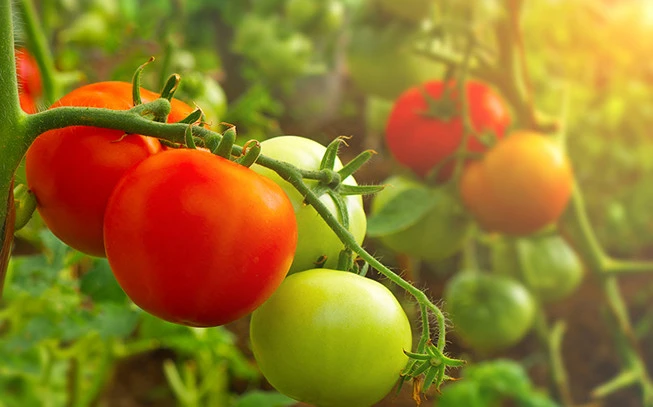
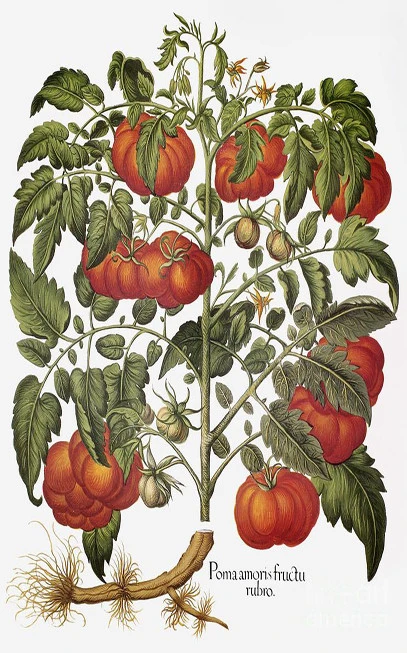
Our famous summer tomato is actually a fruit!
Herbalists classify tomatoes as fruits, but because they do not have a sweet taste and are quite acidic, they are not consumed as a fruit, but in cooking.
The plant is native to Central and South America, where it came from. In the Mediterranean, which is a basic ingredient of many foods, no one used it in cooking until the 18th century, in our country, in fact, until the 19th and specifically in 1818!
The name tomato or tomato comes from the Aztec word "tomatl", which means "soft fruit", as they were the first to cultivate it. The Spanish conquerors called it "tomate" and brought it to Spain.
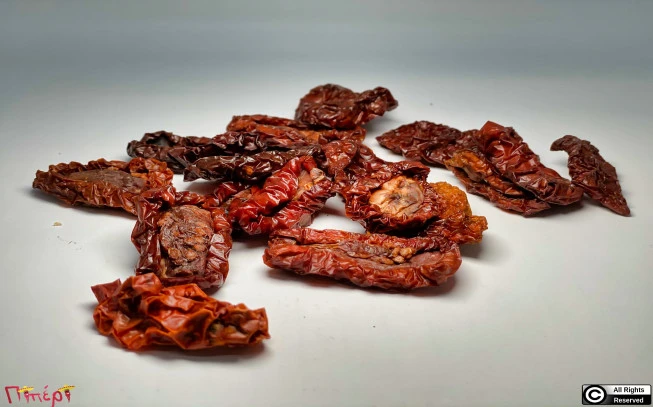
Sun-dried tomatoes, these vegetables that are flavored with sun kisses, are a rich source of nutrients and vitamins.
They supply the body with vitamins K (strong bones, skin elasticity, arthritis, wrinkle reduction) and C (improves microcirculation, and therefore proper oxygenation of cells) as well as iron and are essential nutrients for someone who runs .
Lycopene, which is considered an anti-cancer substance, is found in tomato peel.
In fact, they contain 20% more lycopene than fresh tomatoes. in salads, sandwiches and various sauces.
Accompany spaghetti, chicken and pesto sauce with pork in salads, make dips, in sauce, in spaghetti, in puff pastry with prosciutto and cheese, in sandwiches, we can also make meatballs tomatoes, stuffed chicken rolls, burgers, savory cakes, savory cookies, bread and tart.
As is well known, very tasty sun-dried tomatoes are made from ripe regular tomatoes or dehydrated tomatoes, such as the Italian variety pomodori.
Sun-dried tomatoes have the same nutritional value as fresh tomatoes, and to produce one kilo of sun-dried tomatoes, about 14 kilos of fresh tomatoes are needed.
Many times the dried tomatoes that we keep in the jars at home, become too hard, to soften them, we put them in a bowl of lukewarm water for about 20 minutes or more, if necessary, depending on the degree their dehydration
A normal sized tomato (about 200g) has only 40 calories.
Side effects:
But beware of certain diseases, such as sugar, should be avoided.
 Filters
Available
Code: 347
Price: 1,10€ / 50 grams
Available
Code: 480
Price: 1,40€ / 100 grams
Available
Code: 398
Price: 1,20€ / 100 grams
Available
Code: 316
Price: 6,50€ / 50 grams
Available
Code: 284
Price: 1,20€ / 100 grams

‹
›