





Chia, a super weapon in our diet.
DETOXIFICATION - NUTRITION
FAT BURNING – WEIGHT LOSS
HEART
ORAL HEALTH
STIMULANT
STOMACH
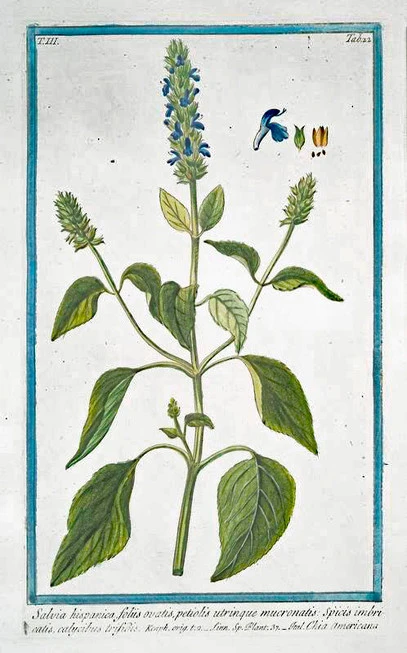
There is evidence that Salvia hispanica was cultivated by the Aztecs during the pre-Columbian era, and economic historians say it may have been as important as maize as a food crop.
It was given as an annual tribute by the people to the governors in 21 of the 38 Aztec provinces.
Chia seeds served as a staple food for Aztec crops. Jesuit historians have listed chia as the third most important crop in Aztec culture, behind only corn and beans.
Offerings to the Aztec priesthood were often paid in chia seeds.
Chia seeds are grown on a small scale in their ancestral homeland of central Mexico and Guatemala and commercially throughout Central and South America.
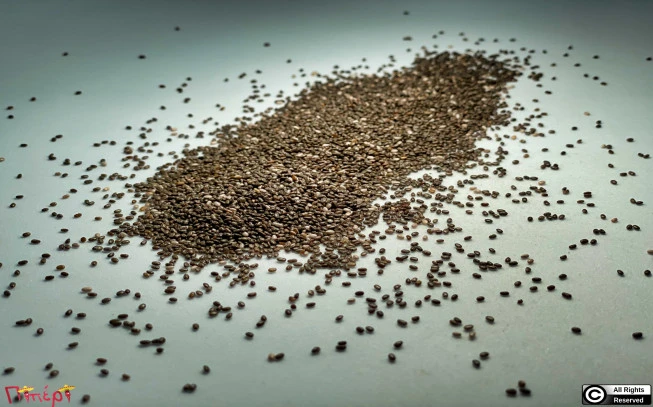
Chia seeds are oval and gray with black and white spots, about 2 mm in diameter. The seeds are hydrophilic, they absorb up to 12 times their weight in liquid when soaked and develop a mucous coating that gives food and beverage-based chia a distinct gel texture.
Therapeutic:
Chia seeds are considered to be a raw whole grain food, containing all the ingredients of wheat. It is a perfect vegetable protein, with a protein composition of 18.9%, or 5g per ounce.
In addition, chia seeds contain 9 essential amino acids (protein building blocks) - what we need to get from food because our body can not produce them on its own.
Protein is an important nutrient for muscle growth and repair and has also been shown to help with weight loss, fat loss and weight maintenance.
Protein slows down digestion and keeps food in the stomach longer, which makes you feel more satisfied and makes it less likely to eat more.
Chia seeds contain three specific fatty acids: alpha-linolenic acid (ALA), eicosapentaenoic acid (EPA) and docosahexaenoic acid (DHA), but are the highest in ALA. DHA and EPA are the most correlated fatty acids to cardiovascular health.
Its fatty acids have anti-inflammatory properties and reduce the risk of heart disease, arthritis and certain types of cancer.
Omega-3 fatty acids reduce stiffness and pain.
Potassium is an essential nutrient found in a variety of foods, with chia seeds being a perfect source. Maintaining a normal potassium intake is important for health and another benefit of regular consumption of chia seeds.
Chia seeds actually contain more calcium than a glass of milk. Calcium, magnesium and phosphorus are all critical to heart, tooth and bone health and can be difficult to get nutrients for those who have. lactose intolerance or milk allergies.
Antioxidants are powerful ingredients that can prevent or slow down the damage to your cells.
Phosphorus is a metal that is found in every cell of your body and is critical to good health. It is vital for the metabolism of carbohydrates and fats and works alongside calcium to keep bones and teeth strong and healthy.
Chia seeds contain about 35g of fiber per 100g, making them extremely high in fiber - 5 times higher than quinoa or corn. 1 Because fiber is not digestible, it makes us feel fuller and can help with weight loss.
Because of their ability to absorb water and expand, chia seeds take up even more space in the stomach. Fiber also helps maintain a good bowel function.
Zinc is essential for growth, especially in children and pregnant women. Zinc is also an integral part of a healthy immune system and is often supplemented to help wounds heal faster and even help reduce the duration and severity of the common cold.
You can get iron in your diet from red meat and other animal products, which can make it a challenge for them. vegetarians to get enough iron. Chia seeds are a great example of a good plant source of iron - even higher than the liver, which is traditionally considered the best way to increase iron intake.
Magnesium plays an important role in transmitting signals through the heart and the rest of the body. It is also important for the health of your muscles, including your heart muscle. 100 grams of chia seeds contain 340mg of magnesium and the recommended daily intake is between 300-400mg. 2
Properties : Chia seeds are rich in omega-3 fatty acids and α-linolenic acid, as well as fiber, amino acids, antioxidants, minerals and other nutrients. Essential fatty acids increase HDL (good cholesterol) levels, while lowering LDL (bad cholesterol) and triglycerides. Chia seeds are also rich in soluble and insoluble fiber. they also have hydrophilic properties that help regulate electrolytes. The complex carbohydrates in chia seeds break down slowly, maintaining energy levels to improve strength and endurance. Omega-3 fatty acids also boost spiritual energy. Chia seeds contain both soluble and insoluble fiber. Soluble fiber absorbs water and expands to form a type of jelly, which creates a feeling of fullness and thus helps us consume fewer calories. Insoluble fiber that is not digested helps prevent constipation and digestive disorders.
How to use :
Chia seeds can be eaten raw, roasted, ground or mixed with water.
Sprinkle chia seeds on your cereal, oats or even yogurt
Sprinkle them on your daily salad.
Add them to salad dressings or to your meat and pasta sauces.
Add two tablespoons to your smoothies or protein shakes.
Add them to legumes and soups to thicken.
Chia seeds can be sprinkled or ground on top of other foods.
Chia seeds can also be mixed with granola bars, tortillas and bread.
They can be soaked in water and consumed directly or mixed with any kind of juice or milk.
Chia seed pudding, similar to tapioca pudding, is made with a type of milk, sweetener and whole chia seeds.
Chia seeds can also be ground into a gelatin-like substance or eaten raw.
Ground seed gel can be used to replace up to 25% of egg and cake oil content.
Unlike flaxseed, despite the popular misconception, chia seeds are digestible whole and do not need to be ground.
The human body absorbs the same nutrients from chia seeds regardless of whether the seeds are dry or soaked and whether whole or ground
Dried chia seeds contain 6% water, 42% carbohydrates, 16% protein and 31% fat.
At 100 grams, chia seeds are a rich source (20% or more of daily value, DV) of B vitamins, thiamine and niacin (54% and 59% DV, respectively), and a moderate source of riboflavin (14 % DV) and folic acid (12% DV). Many dietary minerals are high in calcium, iron, magnesium, manganese, phosphorus and zinc (all over 20% DV). Nutritional value per 100 g:
Energy 486 kcal
Carbohydrates 42.1 g
Fiber 34.4 g
Fat 30.7 g
Protein 16.5 g Vitamin A 7% 54 μg
Thiamine (B 1) 54% 0.62 mg
Riboflavin (B 2) 14% 0.17 mg
Niacin (B 3) 59 % 8.83 mg
Folic (B 9) 12% 49 μg
Vitamin C 2% 1.6 mg
Vitamin E 3% 0.5 mg
Calcium 63% 631 mg
Iron 59% 7.7 mg
Magnesium 94% 335 mg
Manganese 130% 2.72 mg
Phosphorus 123% 860 mg
Potassium 9% 407 mg Zinc 48% 4.6 mg
Water 5.8 g
 Filters
Available
Code: 695
Price: 6,00€ / 50 grams
Available
Code: 75
Price: 4,75€ / 50 grams
Available
Code: 469
Price: 1,20€ / 200 grams

‹
›