




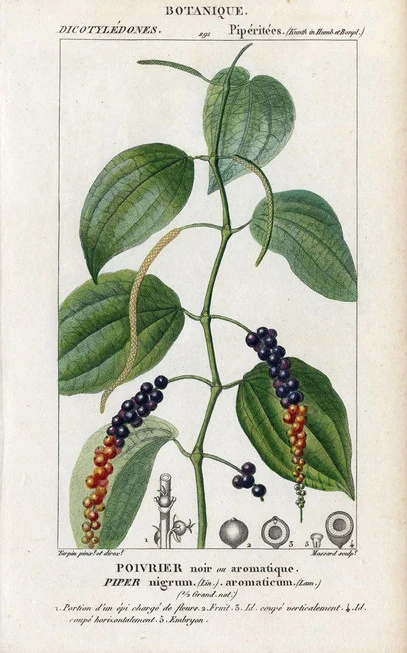
Black pepper, the king of gastronomy.
FAT BURNING – WEIGHT LOSS
ORAL HEALTH
PROTECTOR
RESPIRATORY
STOMACH
The word "pepper" has its roots in the Dravidian word for long pepper, pippali. The ancient Greeks called it (pepper, pepereos, to peperei) and the Latins converted pippali to Latin piper,
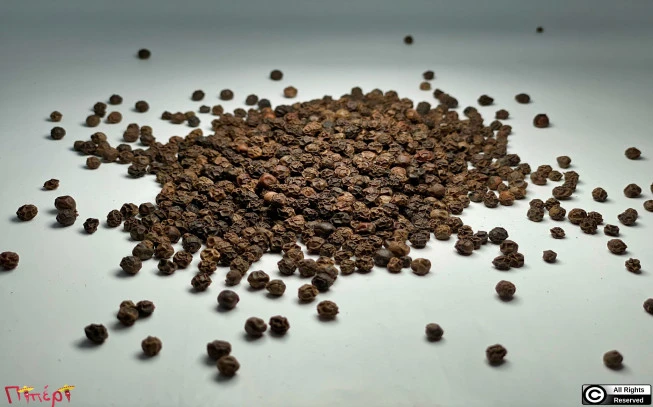
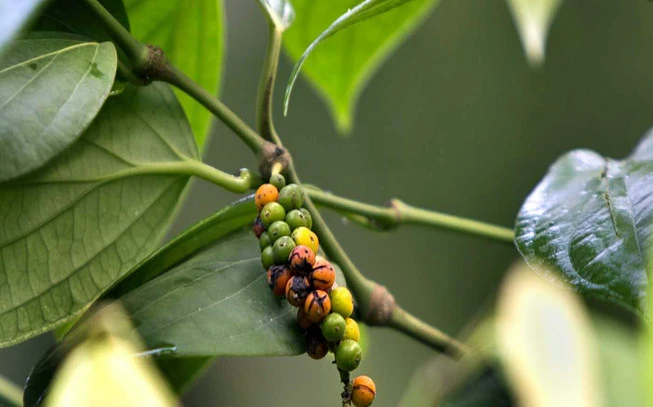
Black pepper (Piper nigrum), black pepper or commonly black pepper is a flowering climbing plant (the pepper tree or pepper tree) of the order Peperidae and the family Piperraceae (Piperaceae), which is cultivated for its fruits, which which are usually dried and used as a spice and seasoning.
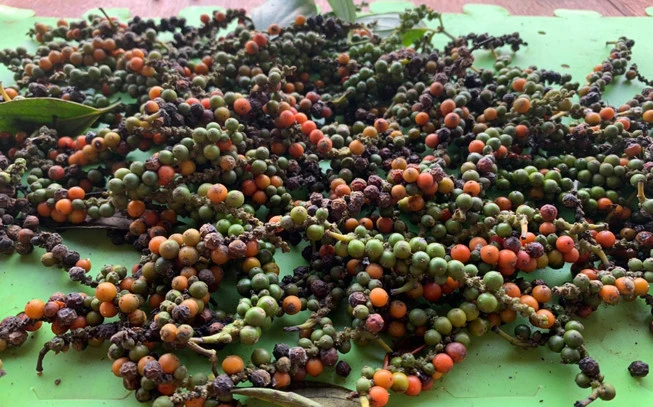
The fruit, also known as peppercorn, when dried reaches a diameter of 5 mm (0.20 inches), when not fully ripe, turns dark red and like all holes, contains a single seed.
The difference in color is due to the different harvest times and the processing to which the grains are subjected.
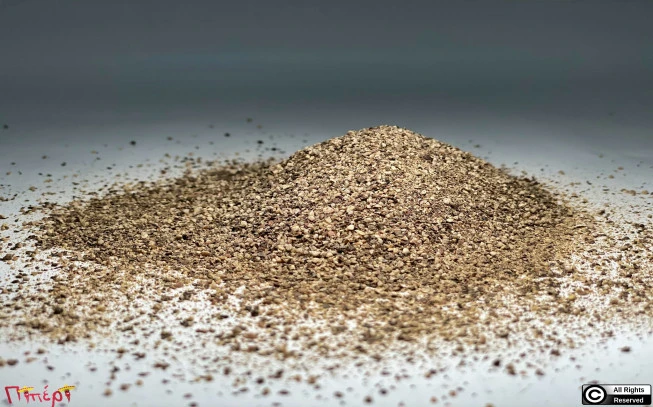
Peppercorns and grated pepper derived from them can simply be described as
pepper or more precisely as black pepper ( cooked and dried unripe fruits ),
green pepper ( dried unripe fruits )
or white pepper or white pepper or commonly either white pepper or white pepper ( ripe seeds ).
Cooking:
Black pepper is the fruit that has been dried in the fire or in the sun before it ripens, when it is still green. It is the strongest of the peppers, of course it varies depending on the degree of maturity and the processing it has undergone.
Pepper can be used anywhere, in whatever we cook, to put it better, in whatever we can eat.
But what we would never think is that we can combine it with fruits, especially strawberries, orange juice and peaches.
An old Roman recipe suggests rubbing white pepper in a mixture of olive oil, wine and vinegar to season the white sauces for serving fish.
Never put pepper in hot oil or butter, because it crystallizes, becomes bitter and loses its properties.
In foods that are cooked for a long time, such as meat in the oven or pot, it is better to put the pepper in grains from the beginning to release all its aromas.
We can if we want to finish with freshly ground pepper on the plate, for a fresher, delicious, peppery aroma.
Of course the pepper does not stop there but it also offers us healing properties.
Therapeutic:
Black pepper has a warming effect on the body.
It irritates certain taste buds of the tongue, which in turn send the message to the stomach and this secretes hydrochloric acid, preparing it to accept the food we swallow.
At the same time, gastric and pancreatic enzymes increase, especially chymotrypsin, an enzyme necessary for the digestion of proteins as well as lipase and bile acids, necessary for the digestion of fats.
Black pepper has very important antioxidant properties, due to piperine, but also to a phytochemical that contains curcumin.
Phytochemicals are ingredients that plants produce to protect themselves against viruses, bacteria or fungi.
Curcumin also has antibacterial properties, which makes black pepper especially important for maintaining good gastrointestinal health.
Like most spices, it is associated with a reduced risk of colon and prostate cancer.
It is an excellent source of Iron, as a teaspoon gives us about 5% of the amount we need daily and Manganese, as a teaspoon gives us about 8% of the required daily amount.
Black pepper can also help prevent flatulence and reduce stomach upset.
For people suffering from mild anorexia it can help them regain their appetite because it stimulates the taste buds.
For colds in the chest we add black pepper to our diet. Helps fight congestion, especially if added to a strong, steaming cup of mint tea.
It has a positive effect on the cold-damaged respiratory system.
Helps maintain healthy teeth.
 Filters
Available
Code: 153
Price: 1,75€ / 50 grams
Available
Code: 279
Price: 1,20€ / 100 grams
Available
Code: 287
Price: 2,00€ / 100 grams
Available
Code: 402
Price: 1,20€ / 100 grams

‹
›